

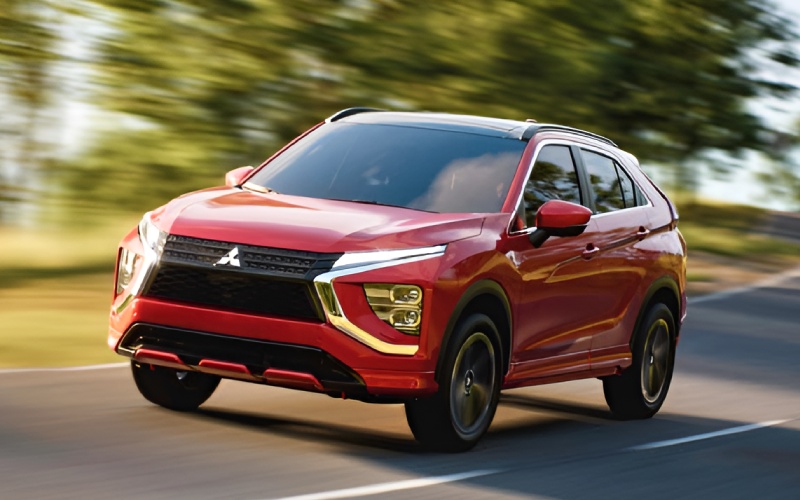
South Suburban Mitsubishi - Which SUV is the better all-weather pick for Tinley Park, IL commutes — the 2026 Mitsubishi Eclipse Cross with S-AWC or the 2026 Honda HR-V with Real Time AWD?
When winter slush turns to black ice overnight and spring showers add standing water to your route, traction technologies become more than spec-sheet trivia. The question we hear most often is whether the standard Super-All Wheel Control on the Eclipse Cross or the available Real Time AWD™ on the HR-V is better for daily life around Tinley Park, IL. While both systems add confident takeoff and help in low-traction situations, S-AWC integrates torque distribution and selective braking to help keep the vehicle tracking precisely in corners and on uneven, slick surfaces—standard on every Eclipse Cross trim. Honda’s system is capable and predictable, but because it is available rather than standard, shoppers have to choose carefully to ensure they get the traction they want.
Beyond the AWD systems, it’s helpful to consider visibility and control features. The Eclipse Cross offers a Multi-View Camera System on upper trims, an available heated steering wheel, and paddle shifters for confident control on steep ramps or when managing momentum on snow. The HR-V presents a smart feature set of its own with Honda Sensing® standard, available blind spot information (Sport and EX-L), and a tidy cabin layout. However, HR-V does not offer a surround-view camera or a hands-free power tailgate—two conveniences that are particularly useful when parallel parking on slushy streets or loading up after a grocery run.
- S-AWC versus Real Time AWD™: S-AWC is standard in every Eclipse Cross; Real Time AWD™ is available on HR-V.
- Traction tuning: S-AWC actively coordinates torque and braking at each wheel to help maintain your line through turns.
- Visibility tools: Eclipse Cross offers an available Multi-View Camera System; HR-V does not offer surround-view capability.
- Cold-weather touches: An available heated steering wheel on the Eclipse Cross helps on frigid mornings; HR-V does not offer one.
- Everyday convenience: Handsfree Power Tailgate available on Eclipse Cross; HR-V’s tailgate is manual.
Performance character also differs. The Eclipse Cross uses a turbocharged 1.5-liter engine that emphasizes low-rpm torque. That kind of thrust is exactly what helps you merge smoothly and climb snowy driveways without over-revving. The HR-V’s naturally aspirated 2.0-liter engine builds power steadily but lacks the easy, early torque of a turbo, which can require more throttle in slick conditions. If you plan to bring along a small trailer or extra gear for weekend projects, the Eclipse Cross is rated to tow up to 1,500 pounds, while the HR-V in the U.S. is generally not rated for towing.
Finally, consider long-term peace of mind. Mitsubishi backs the Eclipse Cross with a 10-year/100,000-mile Powertrain Limited Warranty and includes 2 years/30,000 miles of limited maintenance plus 5 years of 24-hour Roadside Assistance. Honda’s warranties are competitive in the segment, yet not as generous in duration for the powertrain. Factor in that the Eclipse Cross makes its most capable hardware standard across the range, and it’s easy to see why it’s often the better all-weather pick for drivers who want confident traction without stepping up to a specific trim.
South Suburban Mitsubishi is serving Orland Park, Chicago Heights, and Tinley Park with knowledgeable guidance and hands-on demonstrations of the systems that matter most in Midwest weather. If your daily routes include plowed side streets, wind-blown overpasses, and tight downtown parking, our team will help you compare trims, test S-AWC in real-world scenarios, and understand how features like the Multi-View Camera System and a Handsfree Power Tailgate make every errand easier.
Frequently Asked Questions:
Does S-AWC help on dry pavement or only in snow?
S-AWC is designed to enhance stability and control in all conditions, not just snow. By actively managing torque and selective braking, it helps you hold your line cleanly through corners and feel composed on rain-slick or dry roads alike.
Can the HR-V’s Real Time AWD™ match S-AWC in everyday use?
Real Time AWD™ offers helpful traction in many situations, but S-AWC’s integrated, always-on approach typically delivers more precise control and is standard across the Eclipse Cross lineup, removing guesswork when you choose your trim.
Is a surround-view camera available on both?
The Eclipse Cross offers a Multi-View Camera System on upper trims for a 360-degree top-down view. The HR-V does not offer a surround-view camera; it features a multi-angle rearview camera instead.
What if I need to tow a small trailer?
The Eclipse Cross is rated to tow up to 1,500 pounds when properly equipped. The HR-V in the U.S. is generally not rated for towing, so the Mitsubishi is the more flexible choice for light-duty hauling.