

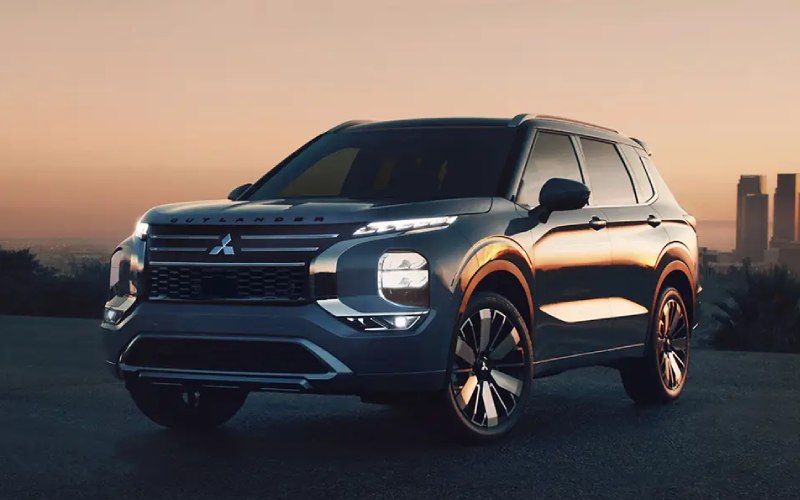
South Suburban Mitsubishi - Which SUV offers better year-round traction and tech — 2025 Mitsubishi Outlander or Nissan Rogue — around Chicago, IL?
Shoppers comparing compact SUVs in the Midwest often ask one core question: which model delivers more confidence on slick, cold, and unpredictable streets while keeping technology intuitive and helpful? In this guide, we unpack how Mitsubishi’s S-AWC and MI-PILOT Assist™ stack up against Nissan’s Intelligent All-Wheel Drive and ProPILOT Assist with Navi-link, and how cabin tech such as navigation, smartphone connectivity, and surround-view cameras differ in daily use. Our aim is to give you a clear, situational breakdown that anticipates the drives you actually take—early-morning commutes, last-minute school pickups, and weekend getaways when the weather can turn quickly.
Start with traction philosophy. Mitsubishi’s Super All Wheel Control (S-AWC) is a traction and stability ecosystem that coordinates power delivery and yaw control to help keep the vehicle settled when surfaces get patchy—think wet leaves, slush at intersections, or gravel shoulders. You select the drive mode, and S-AWC adapts to support your inputs with consistent, calm behavior. Nissan’s Intelligent All-Wheel Drive helps by shuffling torque front to rear, which is valuable in low-traction starts and cornering, and ProPILOT Assist with Navi-link can reduce fatigue on the highway. The deciding factor for many drivers is how these systems behave together in the grey areas—mixed traction, variable crown on older roads, and quick transitions from dry to damp pavement. Here, S-AWC’s integration can feel more planted, particularly for families who juggle multiple routes and conditions every week.
- All-weather traction philosophy: S-AWC integrates stability and torque distribution, while Nissan’s Intelligent AWD primarily manages front-to-rear torque.
- Highway driver assistance: MI-PILOT Assist™ with Navi-link and ProPILOT Assist with Navi-link both support steering and speed, but tuning and feel differ.
- Camera-based awareness: Outlander’s Multi-View Camera System and Rogue’s Around View Monitor both aid parking and tight maneuvers.
- Cabin connectivity: Outlander’s 12.3-inch Smartphone-link Display Audio with Navigation and Rogue’s 12.3-inch display with Google built-in both keep routes and media within easy reach.
- Seating flexibility: Outlander’s standard 7-passenger layout adds options for carpools and visiting family that a two-row layout can’t match.
The Outlander’s 12.3-inch Smartphone-link Display Audio with Navigation is quick to learn, blends physical controls with touch logic, and pairs with wireless Apple CarPlay and Android Auto. Add an available 12.3-inch Full Digital Driver Display and a head-up display on select trims, and you get glanceable information without cognitive overload. Rogue’s large screen and Google built-in offer a similarly modern experience, with strong voice capabilities and an app-forward ecosystem. Where the Outlander nudges ahead is the way its systems—navigation, camera views, and MI-PILOT Assist™—work as a unit, maintaining a consistent look and control logic from screen to steering-wheel buttons. That cohesion reduces distraction during the split-second decisions of urban driving and winter commutes.
If you’re narrowing your shortlist, ask how each SUV serves the edges of your routine. Do you occasionally need a third row? Do you appreciate the way a traction system can keep the vehicle calm through an off-camber, slushy corner? Would you rather have seriously punchy audio for long drives? The Outlander’s standard third row, available S-AWC, and Dynamic Sound Yamaha® Premium system check those boxes, while the Rogue’s refined cabin and connected interface remain appealing for drivers who prioritize two-row simplicity and an app-centric infotainment approach. Either way, you’ll want a carefully planned test route that includes side streets, highway merges, and imperfect pavement to make an informed call.
South Suburban Mitsubishi is serving Chicago, Orland Park, and Chicago Heights with test drives that showcase real-world traction and technology, so you can feel how support systems behave when the weather or traffic pattern changes mid-commute. Bring your typical cargo, your favorite playlist, and a handful of everyday errands, and we’ll help you evaluate each SUV’s strengths with clarity.
Frequently Asked Questions:
Does S-AWC help in light snow and slush or only severe conditions?
S-AWC shines in everyday winter scenarios—light snow, slush ridges, and mixed patches—by coordinating traction and stability to stay composed as grip changes.
How does MI-PILOT Assist™ compare to ProPILOT Assist with Navi-link in real traffic?
Both reduce workload with lane centering and adaptive cruise. Many drivers find MI-PILOT Assist™ feels natural in lane positioning and speed transitions, which can make dense traffic less tiring.
Is the third row in the Outlander practical for adults?
The third row is best for kids or short trips, but it provides crucial emergency flexibility for carpools and visiting family without moving to a larger SUV.
Are both systems compatible with wireless smartphone mirroring?
Yes. Outlander supports wireless Apple CarPlay and Android Auto, and Rogue offers wireless integration, so you can keep cords out of the way on daily drives.